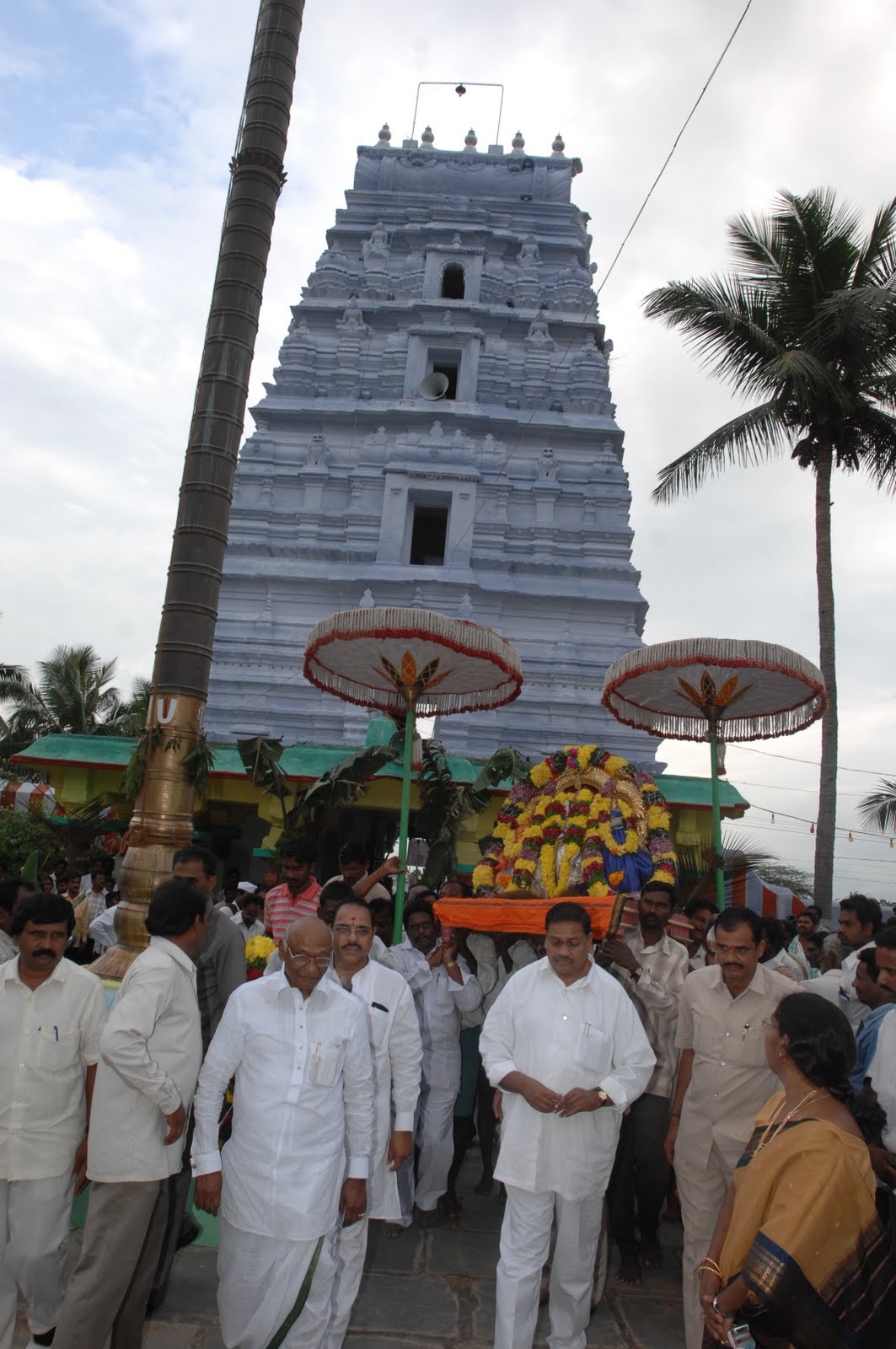
Andhra Mahavishnu Srikakulam possession ,During Srikrishna Devaraya Celebrations
Showing posts with label peoples man. Show all posts
Wednesday, 3 August 2011
విజయనగర సామ్రాజ్యము Vijayanagara Sāmrājyamu
Birth of The Vijayanagara Empire
(Kannada: ವಿಜಯನಗರ ಸಾಮ್ರಾಜ್ಯ Vijayanagara Sāmrājya, Telugu: విజయనగర సామ్రాజ్యము Vijayanagara Sāmrājyamu), referred as the Kingdom of Bisnaga by the Portuguese, was a South Indian empire based in the Deccan Plateau. Established in 1336 by Harihara I and his brother Bukka Raya I of Yadavas Lineage.The empire rose to prominence as a culmination of attempts by the southern powers against Islamic invasions by the end of the 13th century.[3] It lasted until 1646 although its power declined after a major military defeat in 1565 by the Deccan sultanates. The empire is named after its capital city of Vijayanagara, whose impressive ruins surround modern Hampi, now a World Heritage Site in modern Karnataka, India. The writings of medieval European travelers such as Domingo Paes, Fernão Nunes[4] and Niccolò Da Conti and the literature in local vernaculars provide crucial information about its history. Archaeological excavations at Vijayanagara have revealed the empire's power and wealth.
The empire's legacy includes many monuments spread over South India, the best known being the group at Hampi. The previous temple building traditions in South India came together in the Vijayanagara Architecture style. The mingling of all faiths and vernaculars inspired architectural innovation of Hindu temple construction, first in the Deccan and later in the Dravidian idioms using the local granite. Secular royal structures show the influence of the Northern Deccan Sultanate architecture. Efficient administration and vigorous overseas trade brought new technologies like water management systems for irrigation. The empire's patronage enabled fine arts and literature to reach new heights in the languages of Kannada, Telugu, Tamil and Sanskrit, while Carnatic music evolved into its current form. The Vijayanagara Empire created an epoch in South Indian history that transcended regionalism by promoting Hinduism as a unifying factor.
(Kannada: ವಿಜಯನಗರ ಸಾಮ್ರಾಜ್ಯ Vijayanagara Sāmrājya, Telugu: విజయనగర సామ్రాజ్యము Vijayanagara Sāmrājyamu), referred as the Kingdom of Bisnaga by the Portuguese, was a South Indian empire based in the Deccan Plateau. Established in 1336 by Harihara I and his brother Bukka Raya I of Yadavas Lineage.The empire rose to prominence as a culmination of attempts by the southern powers against Islamic invasions by the end of the 13th century.[3] It lasted until 1646 although its power declined after a major military defeat in 1565 by the Deccan sultanates. The empire is named after its capital city of Vijayanagara, whose impressive ruins surround modern Hampi, now a World Heritage Site in modern Karnataka, India. The writings of medieval European travelers such as Domingo Paes, Fernão Nunes[4] and Niccolò Da Conti and the literature in local vernaculars provide crucial information about its history. Archaeological excavations at Vijayanagara have revealed the empire's power and wealth.
The empire's legacy includes many monuments spread over South India, the best known being the group at Hampi. The previous temple building traditions in South India came together in the Vijayanagara Architecture style. The mingling of all faiths and vernaculars inspired architectural innovation of Hindu temple construction, first in the Deccan and later in the Dravidian idioms using the local granite. Secular royal structures show the influence of the Northern Deccan Sultanate architecture. Efficient administration and vigorous overseas trade brought new technologies like water management systems for irrigation. The empire's patronage enabled fine arts and literature to reach new heights in the languages of Kannada, Telugu, Tamil and Sanskrit, while Carnatic music evolved into its current form. The Vijayanagara Empire created an epoch in South Indian history that transcended regionalism by promoting Hinduism as a unifying factor.
Original photo of Sri Krishna Devaraya
శ్రీ కృష్ణదేవరాయల చిత్రపటం లభ్యమైంది!
సాహితీ సమరాంగణ చక్రవర్తి శ్రీ కృష్ణదేవరాయల రూపును వెల్లడించే చిత్రపటం ఆచూకీ ఎట్టకేలకు లభ్యమైంది. పోర్చుగీసు యాత్రీకుడు,చిత్రకారుడు డామింగో పేస్ 1520 సంవత్సరంలో ఈ చిత్రాన్ని గీశారు. రాయలను చిత్రించడానికి పేస్ కు 15 వారాల సమయం పట్టిందట! పూనే నగరం లోని భారతీయ ఇతిహాస్ సంశోదన్ మండల్ లో ఉన్న ఈ చిత్రాన్ని హైదరాబాదుకు చెందిన ప్రముఖ చారిత్రక పరిశోధకుడు డాక్టర్ క్రిష్ణారావు కేశవ్ ఫోటో తీసి వెలుగులోకి తెచ్చారు. శ్రీ కృష్ణదేవరాయల 500 వ పట్టాభిషేక వారోత్సవాలు జరుగుతున్న ఈ సందర్భంలో రాయల అసలు చిత్రం వెలుగు చూడటం సంతోషించదగ్గ విషయం! విజయనగర సామ్రాజ్యాన్ని పాలించిన 26 మంది రాజుల్లో 1509 నుండి 1529 వరకు ఓటమి ఎరుగని చక్రవర్తిగా పాలన సాగించిన రాయలు తన 49 వ ఏట కడుపుశూల వ్యాధికి గురై మరణించారని చరిత్ర చెబుతోంది.
శ్రీ కృష్ణదేవ రాయలు
శ్రీ కృష్ణదేవ రాయలు (పా.1509-1529) అత్యంత ప్రసిద్ధ విజయనగర సామ్రాజ్య చక్రవర్తి. ఈయన పాలనలో సామ్రాజ్యము అత్యున్నతస్థితికి చేరుకున్నది. కృష్ణరాయలను తెలుగు మరియు కన్నడ ప్రజలు భారతదేశాన్ని పాలించిన గొప్ప చక్రవర్తులలో ఒకడిగా అభిమానిస్తారు. సాహిత్యములో ఈయన ఆంధ్ర భోజుని గా మరియు కన్నడ రాజ్య రమా రమణ గా కీర్తించబడినాడు. ఈయన పాలనను గురించిన సమాచారము పోర్చుగీసు సందర్శకులు డొమింగో పేస్ మరియు న్యూనిజ్ ల రచనల వలన తెలియుచున్నది. రాయలకు ప్రధాన మంత్రి తిమ్మరుసు. శ్రీకృష్ణదేవరాయలు సింహాసనం అధిష్ఠించడానికి కూడా తిమ్మరుసు చాలా దోహదపదడినాడు. కృష్ణరాయలు తిమ్మరుసును పితృసమానునిగా గౌరవించి "అప్పాజీ" (తండ్రిగారు) అని పిలిచేవాడు.
కృష్ణదేవ రాయలు, తుళువ నరస నాయకుడు, నాగలాంబల తెలుగు ఆడపడుచు కుమారుడు ఇతను ఇరవై సంవత్సరాల వయసులో ఫిబ్రవరి 4, 1509న విజయనగర రత్నసింహాసనాన్ని అధిష్ఠించినాడు. ఇతని పట్టాభిషేకానికి అడ్డురానున్న అచ్యుత రాయలు నూ, వీర నరసింహ రాయలునూ, అనుచరులనూ తిమ్మరుసు సుదూరంలో ఉన్న దుర్గములలో బంధించినాడు.
పరిశోధనల ప్రకారము నరస నాయకుడు చంద్రగిరి ప్రాంతము వాడు. ఇంటిపేరు'సంపెట'. తుళువ ప్రాంతములో 20 సంవత్సరాలుండి సాధించిన ప్రాభవమునకు 'తుళు' పదము చేరినదని చరిత్రకారుల అభిప్రాయము. రాయలు తల్లి నాగలాంబ గండికోటను పాలించిన పెమ్మసాని నాయకులు ఆడపడుచు
కృష్ణదేవ రాయలు, తుళువ నరస నాయకుడు, నాగలాంబల తెలుగు ఆడపడుచు కుమారుడు ఇతను ఇరవై సంవత్సరాల వయసులో ఫిబ్రవరి 4, 1509న విజయనగర రత్నసింహాసనాన్ని అధిష్ఠించినాడు. ఇతని పట్టాభిషేకానికి అడ్డురానున్న అచ్యుత రాయలు నూ, వీర నరసింహ రాయలునూ, అనుచరులనూ తిమ్మరుసు సుదూరంలో ఉన్న దుర్గములలో బంధించినాడు.
పరిశోధనల ప్రకారము నరస నాయకుడు చంద్రగిరి ప్రాంతము వాడు. ఇంటిపేరు'సంపెట'. తుళువ ప్రాంతములో 20 సంవత్సరాలుండి సాధించిన ప్రాభవమునకు 'తుళు' పదము చేరినదని చరిత్రకారుల అభిప్రాయము. రాయలు తల్లి నాగలాంబ గండికోటను పాలించిన పెమ్మసాని నాయకులు ఆడపడుచు
Kuchipudi, a blend of music and abhinaya
International Kuchipudi Dance Festival in USA under SILICON ANDHRA,KUCHIBATALA ANAND OTHERS WERE PRESENT , Mandali Buddha prasad receiving Guinness book of world records certificate
Kuchipudi, a blend of music and abhinaya, is Andhra Pradesh's unique contribution to dance.
The dance styles in the State are based on the standard treatises, viz. Abhinaya Darpana and Bharatarnava of Nandikeshwara, which is sub-divided into Nattuva Mala and Natya Mala. Nattuva Mala is of two types - the Puja dance performed on the Balipitha in the temple and the Kalika dance performed in a Kalyana mandapam.Nattuva Mala is of three kinds, viz. Ritual dance for gods, Kalika dance for intellectuals and Bhagavatam for common place.The Natya Mala is a dance-drama performed by a troupe, consisting only of men, who play feminine roles.
Movements and Music
The songs in Kuchipudi are mimed with alluring expressions, swift looks and fleeting emotions evoking the rasa. In Tarangam at times she places a pot full of water on her head and dances on the brass plate. The song accompanying this number is from the well known Krishna Leela Tarangini, a text which recounts the life and events of Lord Krishna
Int Kuchipudi Dance Festival in USA
International Kuchipudi Dance Festival in USA under SILICON ANDHRA,KUCHIBATALA ANAND OTHERS WERE PRESENT .
Kuchipudi (కూచిపూడి) (pronounced as 'Koochipoodi') is a Classical Indian dance form from Andhra Pradesh, India. It is also popular all over South India. Kuchipudi is the name of a village in the Divi Taluka of Krishna district
that borders the Bay of Bengal and with resident Brahmins practicing this traditional dance form, it acquired the present name.
The performance usually begins with some stage rites, after which each of the character comes on to the stage and introduces him/herself with a daru (a small composition of both song and dance) to introduce the identity, set the mood, of the character in the drama. The drama then begins. The dance is accompanied by song which is typically Carnatic music. The singer is accompanied by mridangam (a classical South Indian percussion instrument), violin, flute and the tambura (a drone instrument with strings which are plucked). Ornaments worn by the artists are generally made of a light weight wood called Boorugu.
The 20th Karana is very often used in Kuchipudi dance. Apart from six padabhedas, Kuchipudi dancers also use some adugulu or adavus traditional to this school: Chaukam, Katteranatu, Kuppi Adugu, Ontaduvu, Jaraduvu, Pakkanatu
Kuchipudi (కూచిపూడి) (pronounced as 'Koochipoodi') is a Classical Indian dance form from Andhra Pradesh, India. It is also popular all over South India. Kuchipudi is the name of a village in the Divi Taluka of Krishna district
that borders the Bay of Bengal and with resident Brahmins practicing this traditional dance form, it acquired the present name.
The performance usually begins with some stage rites, after which each of the character comes on to the stage and introduces him/herself with a daru (a small composition of both song and dance) to introduce the identity, set the mood, of the character in the drama. The drama then begins. The dance is accompanied by song which is typically Carnatic music. The singer is accompanied by mridangam (a classical South Indian percussion instrument), violin, flute and the tambura (a drone instrument with strings which are plucked). Ornaments worn by the artists are generally made of a light weight wood called Boorugu.
The 20th Karana is very often used in Kuchipudi dance. Apart from six padabhedas, Kuchipudi dancers also use some adugulu or adavus traditional to this school: Chaukam, Katteranatu, Kuppi Adugu, Ontaduvu, Jaraduvu, Pakkanatu
Sunday, 17 July 2011
Monday, 27 June 2011
Wednesday, 8 June 2011
Nataraja RamaKrishna; Condolence message
Nataraja RamaKrishna,Condolence message
We can never forget the Great Personolity who in Telugu Dance,Inventor of Perini Dance,His research and re invented Perini dance form.
Nataraja Ramakrishna (31 March 1923 - 7 June 2011) was a dance guru from Andhra Pradesh, India. He was the chairman of Andhra Pradesh Sangeeta Nataka Academy, a dance artist, guru, scholar, and musicologist who propagated classical dance in Andhra Pradesh for 60 years.
He was the architect of the revival of the Andhra Natyam dance form, a devotional temple dance tradition performed in Andhra Pradesh for over 400 years until virtually extinct.
Over his long career he trained many dancers and wrote and choreographed highly acclaimed dance dramas. As a research scholar sponsored by the Government of India, he worked in the then USSR (Russia) and France to propagate Indian dance art, making a comparative study of Indian and western Classical and folk dances.
He wrote more than 40 books, many of them highly awarded, and his contribution to the art of dance is widely recognized. With his innumerable performances, lecture demonstrations and through his extensive travels he created an awareness not only of Kuchipudi dance, but also revived the lost and forgotten dance forms of Andhra Pradesh
We can never forget the Great Personolity who in Telugu Dance,Inventor of Perini Dance,His research and re invented Perini dance form.
Nataraja Ramakrishna (31 March 1923 - 7 June 2011) was a dance guru from Andhra Pradesh, India. He was the chairman of Andhra Pradesh Sangeeta Nataka Academy, a dance artist, guru, scholar, and musicologist who propagated classical dance in Andhra Pradesh for 60 years.
He was the architect of the revival of the Andhra Natyam dance form, a devotional temple dance tradition performed in Andhra Pradesh for over 400 years until virtually extinct.
Over his long career he trained many dancers and wrote and choreographed highly acclaimed dance dramas. As a research scholar sponsored by the Government of India, he worked in the then USSR (Russia) and France to propagate Indian dance art, making a comparative study of Indian and western Classical and folk dances.
He wrote more than 40 books, many of them highly awarded, and his contribution to the art of dance is widely recognized. With his innumerable performances, lecture demonstrations and through his extensive travels he created an awareness not only of Kuchipudi dance, but also revived the lost and forgotten dance forms of Andhra Pradesh
Friday, 3 June 2011
Subscribe to:
Posts (Atom)


